
Opus 5.5 vs GPT-6.2 Sol vs Gemini 4 Neon vs DeepSeek: one prompt, four games you can play
We gave Claude Opus 5.5, GPT-6.2 Sol, Gemini 4 Neon and DeepSeek V4.1 Flash the same prompt on a cloud dev box. Play the four ski games they built, with the time and cost of each run.
Benchmarks tell you which coding model scores higher. They do not show you what each one hands back when you ask for something people will look at. So on 2026-11-26 we gave four models the same prompt, each on a clean cloud Linux machine with a desktop and a browser, and kept whatever came out. The prompt asked for a one-button downhill skiing game in a single HTML file.
All four games are below, exactly as the models wrote them. Play them and pick your own winner.
Click the game first, then click, tap or press Space to switch direction. Choose a model below to load its game here.

Short version:
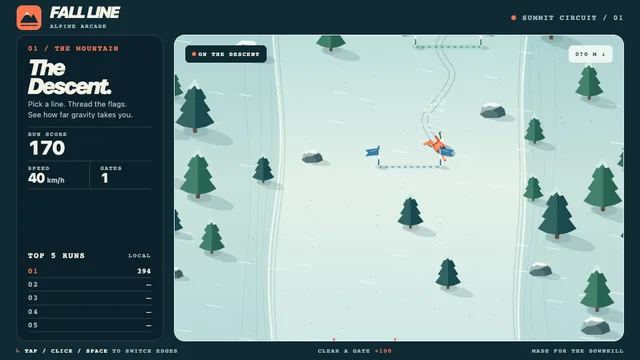
- GPT-6.2 Sol was done in under three minutes and shipped the most designed game: its own arcade layout with a score panel beside the slope.
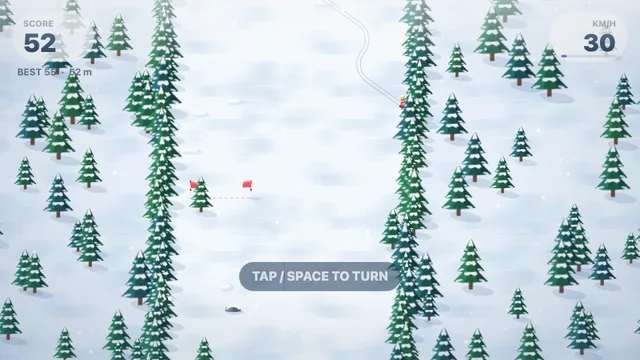
- Claude Opus 5.5 never said it was done. Its game was playable early, and it spent the rest of the 25-minute limit measuring frame rate and polishing. It was still testing when we stopped it.
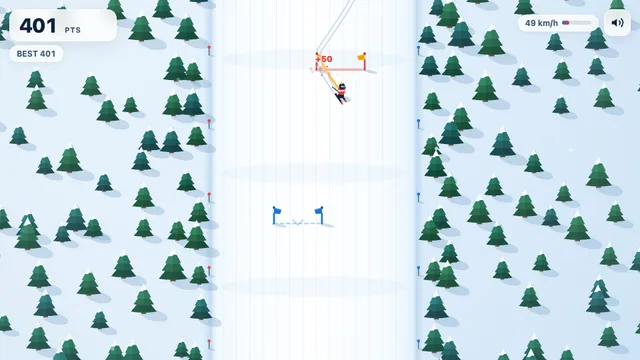
- Gemini 4 Neon wrote the most code (75 KB) and added things the prompt did not ask for: a speed meter, combo multipliers and a mute button. It was also the most expensive run.
- DeepSeek V4.1 Flash cost a cent and a half. Its game runs, but it wrote the file and stopped without play-testing, and the slope is nearly empty.
The prompt
Every model got this, word for word:
Build a one-button downhill skiing game for the browser. Put it in /home/user/game as a single self-contained index.html (no external assets, no CDN, no build step, no network requests).
Requirements: one input only (tap, click or Space switches the skier's direction). A procedurally generated slope with trees, rocks and slalom gates; speed ramps up over time. Particle effects. Sound effects synthesized with WebAudio. Score, plus a top-5 leaderboard saved in localStorage. Must be playable on a phone touchscreen in portrait and on a desktop browser. Make it look good: this will be shown to people.
When the code is written: serve it in the background, open it in the desktop's Chromium, actually play-test it, check the console for errors, and fix every bug you find. Stop when the game runs cleanly.
The last paragraph is the part that separates a model that writes code from a model that finishes a job. The machine had a real desktop with Chromium on it, so "play-test it" was something the agent could really do.
Results
| Model | Game | Time | Requests | Output tokens | Cost | File |
|---|---|---|---|---|---|---|
| Claude Opus 5.5 | Slope Rush | 25:00 (limit) | 22 | 86,883 | $0.69 | 44 KB |
| GPT-6.2 Sol | Fall Line | 2:51 | 16 | 14,378 | $0.72 | 26 KB |
| Gemini 4 Neon | Alpen Carve | 8:04 | 16 | 45,972 | $1.09 | 75 KB |
| DeepSeek V4.1 Flash | Powder Rush | 2:41 | 3 | 27,686 | $0.015 | 31 KB |
Time is wall-clock from the prompt to the agent stopping. Cost is what each run was billed on QuickSilver Pro on 2026-11-26.
Two notes on the cost column. Claude models are 75% below Anthropic's list price on QuickSilver Pro, which is why Opus looks cheap next to GPT-6.2 Sol; at list price the same Opus run would have cost about $2.77. And DeepSeek's three requests are the whole story of its run: one to look around, one to write the file, one to say it would serve it.
The race in 33 seconds
Each pane is the real desktop the model was working on, sped up on a shared clock, with the running cost underneath. When a model finishes, its pane switches to its own game being played.
What each model did
Claude Opus 5.5 built Slope Rush: a dense pine forest, a speed readout in km/h, and a leaderboard that records distance and gates for each run. It then wrote its own performance test, found the game ran at about 30 frames per second on the machine's software renderer, and reworked the drawing code until it reached about 48. It was starting phone-portrait touch tests when the time limit hit. Whether that is diligence or not knowing when to stop depends on what you are paying for.
GPT-6.2 Sol kept a short to-do list, wrote Fall Line in one pass, play-tested with keyboard, mouse and emulated touch, and reported no console errors. The game it shipped looks the least like the others: a dark cabinet with the score, speed and gate count in a side panel and the leaderboard always on screen.
Gemini 4 Neon wrote Alpen Carve in a single 31,000-token response, then tested it through the browser's debugging port. It found and fixed three things on its own: a missing favicon that logged a 404, a leaderboard card that did not fit short windows, and bare edges when the window was resized wider.
DeepSeek V4.1 Flash wrote Powder Rush and stopped. The game has a title screen, a score, a leaderboard and a working skier, but few obstacles reach the screen, so there is little to dodge. For 1.5 cents it is a starting point. This was its second attempt; the first returned nothing at all.
How it was run
- Machines: two QuickSilver Machines, each a cloud Linux dev box with 2 vCPU, 4 GB of RAM, a desktop and Chromium. We set one up and cloned it, so both had the same disk, and wiped the game folder, the agent's history and the browser tabs before every run.
- Agent: OpenCode 1.19.5, which comes installed on every Machine, run non-interactively. The only thing that changed between runs was the model.
- Limit: 25 minutes per run.
- Order: Opus and GPT ran at the same time, one per machine. Gemini ran next, then DeepSeek's second attempt.
- One run each. This is a demo, not a benchmark: a second run of the same model would produce a different game. For repeated runs graded with hidden tests, see Opus 5.5 vs GPT-6.1 Sol and Gemini 4 Argon vs Opus 5.5.
- Nothing was edited by hand. The four files on this page are the files the agents left in /home/user/game. We loaded each one on a desktop and a phone viewport afterwards and saw no console errors.
Run it yourself
The whole thing takes one prompt and a few minutes. Create a Machine, open the terminal and run:
opencode run -m quicksilver/gpt-6.2-sol "Build a one-button downhill skiing game ..."
Swap the model id for any of the models in the catalog. Cloning a Machine gives you a second identical box, so you can run two models side by side the way we did. The machine costs $0.02 per running hour; the four runs above cost $2.52 in model usage in total.
If a model you care about builds something better than these four, we would like to see it.